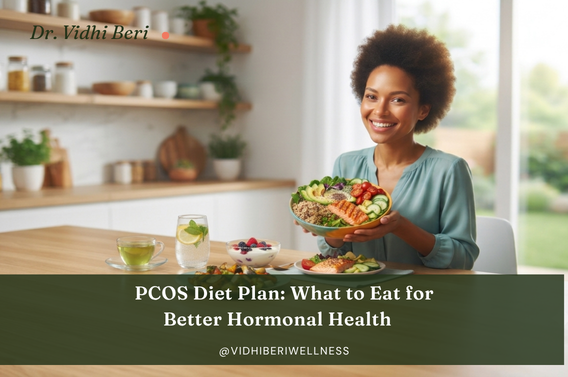
PCOS Diet Plan: What to Eat for Better Hormonal Health
Irregular cycles. Acne that refuses to leave your jawline. Weight that settles stubbornly around the belly. That 4 pm craving for something sweet, every single day. If this sounds familiar, you are not lazy and you are not alone. Your hormones are asking for a different rhythm.
Polycystic ovary syndrome (PCOS) is one of the most common hormonal conditions in Indian women. A nationwide study led by the Indian Council of Medical Research (ICMR), covering nearly 9,000 women aged 18 to 40 and published in JAMA Network Open in October 2024, found PCOS in 7.2% to 19.6% of women, depending on the diagnostic criteria used. It was more common in cities, and highest in Central and North India.
The good news is that PCOS responds to daily habits. This guide gives you a practical PCOS diet plan built around steady blood sugar, with Indian foods, a sample day of meals, plant-based options, and the movement, sleep and stress care that make the diet work.
PCOS, PCOD and PMOS: a quick note
In May 2026, a global consensus published in The Lancet renamed PCOS polyendocrine metabolic ovarian syndrome (PMOS). The new name reflects that the condition affects hormones and metabolism, not just the ovaries, and that the so-called "cysts" are really immature follicles. The change will take about three years to come into wide use, so we use PCOS in this article.
In India, PCOD is often used for the same condition. Medical guidelines don't treat it as a separate diagnosis, so this diet plan applies to you too.
PCOS symptoms: the specific signs to look for
-
PCOS looks different in every woman. Note down any of these signs and share them with your doctor:
-
Irregular periods: cycles longer than 35 days, fewer than eight a year, or none for three months or more
-
Excess hair growth on the chin, upper lip, chest or lower belly
-
Persistent acne along the jawline and chin, and thinning scalp hair
-
Weight around the waist (over 80 cm is a risk marker for Indian women) and dark, velvety patches on the neck or underarms, a sign of insulin resistance
-
Sugar cravings and energy crashes after meals
-
Difficulty conceiving, low mood or anxiety, and poor sleep
Why diet matters in PCOS
Steadier blood sugar supports steadier hormones. Many women with PCOS, including some who are slim, have insulin resistance: the body's cells respond poorly to insulin, so the pancreas makes more of it. High insulin prompts the ovaries to produce more androgens and lowers a protein (SHBG) that normally keeps testosterone in check. That is how a blood-sugar problem shows up as acne, hair growth and missed periods. An insulin resistance diet — meals that release sugar slowly — helps break this cycle.
Weight, and lean PCOS. If you carry extra weight, losing even 5–10% of it can improve cycles, ovulation and insulin levels. Slow, sustainable PCOS weight loss works better than crash diets. Women at a normal weight can have PCOS too; for them, the focus is food quality, enough protein and muscle-building exercise, not eating less.
The Ayurveda view. Ayurveda describes PCOS as a Kapha–Vata imbalance with weak agni (digestive fire). Warm, freshly cooked meals at regular times, and fewer heavy, sweet and processed foods, fit well with what modern nutrition recommends.
Because PCOS sits at the meeting point of hormones and metabolism, it responds best to a plan that looks at your whole lifestyle. That is the thinking behind Dr Vidhi Beri's Disease Reversal & Lifestyle Disease Management Plan, which supports PCOS, insulin resistance, thyroid concerns and related conditions alongside medical care.
Foods for PCOS: what to eat
The best foods for PCOS are already in the Indian kitchen. The aim is a plate that is high in fibre and protein, leans on plants, and releases energy slowly.
Vegetables first: half the plate. Leafy greens (palak, methi, bathua, sarson, drumstick leaves), gourds (lauki, tori, karela, tinda), crucifers (cauliflower, cabbage, broccoli), beans, bhindi and salad. Their fibre slows how fast sugar enters the blood.
Fibre-rich carbohydrates, in measured portions. Millets (jowar, bajra, ragi, foxtail, kodo), whole wheat, brown, hand-pounded or parboiled rice, and besan or moong-based chillas. Choose whole grains over refined ones, and watch the portion.
Protein at every meal, mostly from plants. Dals, rajma, chana, lobia, sprouts, besan, soya chunks and tofu are the backbone. Curd and paneer can be included if dairy suits you (see the next section). Eggs, fish and chicken are good options for non-vegetarians. In Bengal, a piece of rohu or other freshwater fish in a light mustard gravy is an excellent fit. Protein keeps you full longer and blunts the blood-sugar rise from carbohydrates.
Healthy fats, in small amounts. A teaspoon of ghee, cold-pressed mustard or groundnut oil, a handful of nuts (almonds, walnuts), and seeds such as flax, pumpkin, til and chia. Fats add satiety and support hormone production.
A supportive spice box. Haldi, soaked methi seeds, dalchini and amla have been studied for their effect on blood sugar and inflammation. Think of them as helpful additions to a good diet, not cures on their own.
Dairy or plant-based? Rethinking milk in PCOS
You don't have to give up dairy because you have PCOS, but many women feel better when they cut back on milk and eat more plant-based foods. International PCOS guidelines do not ask women to avoid dairy, and the research is still limited. Here is why cutting back may be worth trying anyway.
Milk triggers a relatively high insulin response, frequent milk intake (especially skimmed milk) has been linked with acne, and many Indian adults digest lactose poorly. Homemade curd and buttermilk are usually better tolerated. A practical approach: for 6–8 weeks, cut back on milk, milky chai, sweetened dairy and whey protein, keep a little curd if it suits you, and track your acne, bloating and cycle.
Plant-based swaps that work in Indian meals: tofu bhurji or tofu tikka in place of paneer; unsweetened, calcium-fortified soy milk or black ginger tea in place of milky chai; sattu, sprouts chaat or roasted chana in place of whey protein; and a small bowl of homemade curd instead of large servings of milk-based dishes.
Look after calcium and key nutrients. If you reduce dairy, get calcium from ragi, til, rajgira, leafy greens, calcium-set tofu and fortified soy milk. Ask your doctor about checking vitamin D and vitamin B12, which are often low in Indian women and especially in those eating mostly plant based.
What to limit
-
Nothing here is banned forever. These are foods to keep occasional, because they push blood sugar and insulin up fast.
-
Refined flour and sugar: biscuits, white bread, bakery items, mithai, maida-based snacks
-
Sweet drinks: packaged juices, colas, sweetened lassi, energy drinks and the sugar in your chai
-
Deep-fried snacks: samosas, pakoras, namkeen and chips
-
Ultra-processed packaged foods: instant noodles, "diet" snacks with long ingredient lists
-
Late-night eating: heavy dinners after 9 pm and post-dinner snacking
Sample Indian PCOS diet plan (PCOD diet chart for one day)
This PCOS diet plan Indian sample is plant-forward, with a non-vegetarian swap for each meal. Use it as a template, not a prescription.
| Time | Plant-based / vegetarian | Non-veg swap |
|---|---|---|
|
Early morning |
Warm water or methi-seed water; 4–5 soaked almonds and 2 walnut halves |
Same |
|
Breakfast (8–9 am) |
2 moong dal chillas with mint chutney, or vegetable poha with peanuts and a small bowl of sprouts |
2-egg vegetable omelette with 1 multigrain roti |
|
Mid-morning (11 am) |
1 seasonal fruit (guava, orange or apple) with 1 tbsp flax or pumpkin seeds |
Same |
|
Lunch (1–1:30 pm) |
2 millet or wheat rotis or 1 katori rice; dal or rajma; 1 katori sabzi; salad; homemade curd or buttermilk (optional) |
Fish curry or chicken in place of dal |
|
Evening (4:30–5 pm) |
Roasted chana or makhana; green tea or unsweetened masala chai |
Add a boiled egg |
|
Dinner (by 8 pm) |
Tofu tikka or paneer with sautéed vegetables, or moong dal khichdi with vegetables and salad |
Grilled fish or chicken with sautéed vegetables and 1 roti |
Portions depend on your age, weight, activity level, medicines and goals. For a plan made for you, book an individual consultation.
Food-sequencing tip: eat your vegetables and protein before the roti or rice, never eat carbohydrates on their own, and take a 10–15 minute walk after lunch and dinner.
Fitness: the non-negotiable half of your PCOS plan
Diet sets the stage, but regular exercise is one of the most powerful tools for PCOS, and it works even if the scale does not move. Active muscles take up glucose from the blood with less insulin. More muscle means a bigger "sink" for blood sugar, lower insulin levels and, over time, lower androgens. Exercise also lifts mood and improves sleep, both of which are often affected in PCOS.
How much is enough?
The 2023 international PCOS guideline recommends:
-
For general health: at least 150 minutes a week of moderate activity (brisk walking, cycling, dancing, swimming), or 75 minutes of vigorous activity (running, skipping, fast-paced classes)
-
For weight loss or preventing weight gain: at least 250 minutes a week of moderate activity, or 150 minutes of vigorous activity
-
Muscle-strengthening on 2 non-consecutive days a week, for everyone
-
Less sitting: break long sitting spells every 30–60 minutes with a short walk or a few squats
What a balanced week can look like
Two strength days (say, Monday and Thursday), 30–40 minutes: squats, lunges, glute bridges, push-ups and band or dumbbell rows, adding weight or reps gradually
Two or three cardio days, 30–40 minutes: brisk walking, cycling, dancing, or short intervals (1 minute fast, 2 minutes easy, repeated 6–8 times)
One yoga day, 30–40 minutes: Surya Namaskar, Baddha Konasana, Malasana, Bhujangasana and Setu Bandhasana
One active fun day: swimming, badminton, a hike or a dance class
One rest day with gentle stretching and a relaxed walk
Beyond the plate: mindfulness, stress and sleep
Dr Vidhi Beri's approach rests on three pillars: Movement, Nutrition and Mindfulness (MNM). The third pillar is the one most PCOS plans forget.
Why stress matters. Chronic stress keeps cortisol high. Cortisol raises blood sugar and worsens insulin resistance, and the adrenal glands can add to androgen levels. Stress also drives the late-night snacking and sugar cravings many women with PCOS know well.
A 10-minute daily practice
-
2 minutes of slow belly breathing: breathe in for 4 counts, out for 6.
-
3 minutes of Bhramari (humming bee breath): close your eyes, breathe in, and hum gently on the out-breath. The long exhale and vibration help the body shift into a calmer state.
-
5 minutes of Aum chanting or Beej mantras: chant slowly, feeling the sound resonate in the chest and head. This is the heart of Dr Beri's sound-healing work, which uses the voice itself rather than only singing bowls.
These practices support relaxation and stress management. They work alongside diet, exercise and medical care, not in place of them.
Also read: What Is Sound Healing? Understanding the Power of Sound, Mantras and Chanting
Sleep: 7–8 hours. Even a few nights of short sleep reduce insulin sensitivity. Keep regular sleep and wake times, finish dinner two to three hours before bed, and put screens away 30–60 minutes before sleeping. If you snore loudly or wake up unrefreshed, tell your doctor, as sleep apnoea is more common in PCOS.
Myths to bust
"PCOS means no rice, ever."
Rice can fit. A measured katori of rice, ideally hand-pounded or parboiled, eaten with dal, sabzi and salad, causes a much gentler sugar rise than a large plate of rice alone.
"Only overweight women get PCOS."
Lean PCOS is common. Weight can make symptoms worse, but it is not the cause, and slim women can have insulin resistance too.
When to see a doctor
Diet and lifestyle are the first line of care for PCOS, but they work best alongside medical guidance. See a gynaecologist or endocrinologist if you have:
-
No period for three months or more, or cycles regularly longer than 35 days
-
Very heavy or prolonged bleeding
-
Difficulty conceiving, or plans to try soon
-
Fast-growing facial or body hair, or noticeable hair thinning
-
Dark, velvety skin patches on the neck or underarms
-
Persistent low mood or anxiety
Frequently asked questions
What is the new name for PCOS?
In May 2026, PCOS was renamed polyendocrine metabolic ovarian syndrome (PMOS) by a global consensus published in The Lancet. The name is being phased in over about three years, so both terms are in use.
What is the best diet for PCOS in India?
A balanced, high-fibre, protein-rich Indian diet built on vegetables, dals and legumes, millets and whole grains, nuts and seeds, with limited refined flour and sugar. A plant-forward plate works well for most women.
Can PCOS be managed with diet alone?
Diet, exercise, sleep and stress care are the first line of management, and for some women they are enough to restore regular cycles. Others also need medicines, which their doctor will decide on.
Is dairy bad for PCOS?
Not for everyone, and guidelines do not ask women with PCOS to avoid it. Milk may raise insulin and has been linked with acne, so many women benefit from cutting back and choosing plant-based options. Homemade curd and buttermilk are usually well tolerated.
Can I eat rice with PCOS?
Yes. Have a measured portion, ideally hand-pounded or parboiled rice, and pair it with dal, vegetables and salad.
What is the best exercise for PCOS?
A mix works best: at least 150 minutes a week of moderate activity such as brisk walking, plus strength training on two days a week. Yoga adds flexibility and stress relief.
Take the next step
PCOS is not something you fix in a week, but it does respond, often within a few months, to steady changes in how you eat, move and rest.
Get a PCOS plan made for you. Dr Vidhi Beri's Disease Reversal & Lifestyle Disease Management Plan brings together nutrition, movement and mindfulness, built around your medical history, reports, symptoms and goals. Sessions run online, by phone or at the clinic, with WhatsApp support in between. Book your consultation today here.
If stress is the missing piece, join a Sonic Sanctuary workshop by Vidhi Beri Wellness to learn breath, humming and mantra practices you can use every day.