What Is Sound Healing? Understanding the Power of Sound, Mantras and Chanting
Stress rarely shows up as a single dramatic symptom. More often it appears as poor sleep, shallow breathing, tight shoulders, irritability or a mind that won't switch off. Nutrition and movement address a large part of this, but many people find they also need a practical way to calm the nervous system. Sound healing is one such tool, and interest in it has grown steadily across Indian cities over the last few years.
This article explains what sound healing involves, what current research suggests, how chanting and Beej mantras fit in, and what a session is like.
What Is Sound Healing?
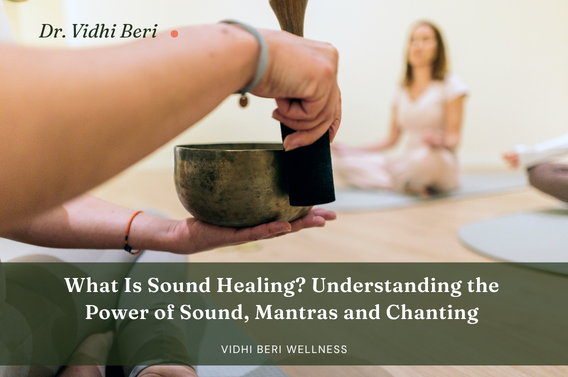
Sound healing is a practice that uses sound and vibration to support relaxation, focus and overall wellbeing. The sound may come from instruments such as singing bowls, gongs or tuning forks, or from the human voice through humming, chanting and mantras.
In practical terms, sound works on three things that affect how stressed or settled a person feels: breathing rate, attention and body awareness. In a well-structured session, a certified sound healer uses sound to slow the breath, give the mind a steady point of focus and help participants notice physical tension they may have been carrying unknowingly.
Sound healing is a complementary wellness practice. It supports, but does not replace, medical diagnosis or treatment.
What Research Says About Sound, Chanting and Stress
Chanting has been part of Indian life for thousands of years, from Vedic recitation to temple aarti and daily shlokas. Similar vocal traditions exist in Tibetan, Christian and Sufi practice. Scientific research into these practices is more recent, but a few studies stand out.
Mantras and breathing rate. A 2001 study published in the BMJ found that reciting yoga mantras slowed participants' breathing to around six breaths per minute without any instruction to do so. This breathing rate is associated with improved heart rate variability and better regulation of blood pressure, both markers of a calmer nervous system.
Aum chanting and the brain. A 2011 pilot study in the International Journal of Yoga used fMRI scans to compare Aum chanting with a neutral "ssss" sound. During Aum chanting, researchers observed reduced activity in brain regions linked to emotional reactivity, including the amygdala.
Singing bowls and mood. A 2017 observational study of singing bowl meditation reported reductions in tension, anxiety and fatigue among participants after a single session.
These findings are encouraging, but most studies so far are small. A 2020 systematic review of singing bowl research concluded that more rigorous trials are needed. The fair conclusion is that sound-based practices have measurable effects on breathing and relaxation, while larger claims about treating specific diseases are not supported by current evidence.
Singing Bowls, Voice and Mantras: How Sound Healing Is Practised
Most people associate sound healing with singing bowls, and for good reason. Bowls produce long, layered tones that are easy to listen to and help the body slow down. In a bowl-based session, the participant's role is mainly to listen and rest.
Voice-based sound healing works differently. Here the participant produces the sound through humming, Aum chanting or mantras. This makes the practice active: participants regulate their own breath, feel vibration in the chest, throat and face, and learn a technique they can repeat at home without any equipment.
Dr Vidhi Beri, a certified Sound Healer, currently focuses on voice-based sound healing through Beej mantras, a method popular with her participants. Chanting is culturally familiar to most people in India, which makes the practice easier to adopt and sustain over time.
Beej Mantras Explained
Beej means "seed" in Sanskrit. Beej mantras are single-syllable sounds, including Lam, Vam, Ram, Yam, Ham and Om, that come from yogic and tantric traditions. Each is considered the concentrated form, or seed, of a larger mantra.
In yogic texts, each syllable is linked to one of the body's energy centres, or chakras, moving upward from the base of the spine. These links are part of traditional practice and have not been scientifically measured.
What can be observed directly is that each syllable produces vibration in a different area of the body. Lam is deep and felt lower in the torso, while Ham is felt more in the throat. Chanting them in sequence moves attention progressively through the body, which makes Beej mantras a useful focusing tool. Because they are short and simple, they are also well suited to beginners who find longer Sanskrit verses difficult.
How Breath Connects Sound and Awareness
Every chant is a slow, controlled exhalation. When the exhale is longer than the inhale, the body tends to shift towards parasympathetic activity, the state associated with rest, digestion and recovery. This is the same mechanism used in many pranayama techniques.
Humming offers a specific benefit. A 2002 study in the American Journal of Respiratory and Critical Care Medicine found that humming increased nasal nitric oxide roughly fifteen-fold compared with quiet exhalation. Nitric oxide supports healthy airway and blood vessel function. Bhramari pranayama, or humming bee breath, uses exactly this action, and a 2018 systematic review noted positive effects on relaxation and some cardiovascular measures.
Sound also helps with attention. Many people struggle with silent meditation because the mind keeps wandering. Chanting gives it something concrete to follow, the sound, the vibration and the breath, which makes mindfulness more accessible.
For a holistic health coach, this is where sound fits naturally into a wider plan. Breath regulation influences sleep, digestion, stress response and emotional balance, all areas that also affect eating habits and energy levels.
What to Expect in a Sound Healing Session
Sessions vary depending on the sound healer and the method used. A Beej mantra session usually begins with a few minutes of settling in and observing the natural breath. This is followed by guided breathing and humming to lengthen the exhale, and then by chanting individual Beej mantras in sequence, from Lam through to Om. Short pauses of silence between rounds give participants time to rest and notice the effect of each sound.
During the practice, many people find their breathing becomes slower and deeper without effort. The vibration of each syllable is often clearly felt, in the lower abdomen with Lam and in the throat with Ham, for example. Mental chatter tends to reduce as attention stays with the sound. Afterwards, some participants feel calm and rested, while others feel more alert and clear-headed.
Responses differ from person to person. Some people experience an emotional release, while others notice little in the first session and begin to see benefits after a week or two of regular practice at home. There is no right or wrong experience. The purpose of each session is to build awareness of breath and body, which becomes easier with consistent practice.
Who Can Benefit from Sound Healing?
Sound healing may suit people who:
-
experience regular work or family stress and want a practical calming technique
-
have tried meditation but find silent practice difficult
-
are interested in chanting and mantras for personal or cultural reasons
-
are already improving diet and fitness and want to address mental wellbeing as well
-
want to improve sleep quality and wind-down routines
People who are pregnant, or who have cardiac, respiratory, neurological or mental health conditions, should consult their doctor before starting any new breathing or sound practice.
Why Consistency Matters More Than a Single Session
One session can be deeply relaxing, but lasting benefit comes from regular practice. As with nutrition and exercise, small daily habits produce more change than occasional intensive efforts.
A sustainable routine might be as simple as five minutes of Aum chanting in the morning, a few rounds of humming breath during a stressful workday, or chanting a Beej mantra before sleep. Over weeks and months, these short practices can improve how the body responds to stress and how well it recovers.
Sound healing should be viewed as part of a broader lifestyle approach, not a quick fix or a cure.
Learning Sound Healing Through Workshops
Dr Vidhi Beri conducts sound healing workshops periodically, including The Sonic Sanctuary in Kolkata. These workshops are designed for learning rather than treatment. Participants are taught how sound affects the brain, body and emotions, practise breathing and humming techniques, explore mantras and vibration, and leave with a daily routine they can follow independently.
Details of upcoming workshops and holistic health coaching are available at vidhiberi.com. You can always contact Dr Vidhi Beri directly regarding her sound healing workshop here.
Frequently Asked Questions
Is sound healing scientifically proven?
Research shows that chanting, humming and slow-breathing practices can influence breathing rate, heart rate variability and relaxation. Most studies are small, and sound healing is not a proven treatment for any disease.
Do I need singing bowls to practise sound healing at home?
No. Humming, Aum chanting and Beej mantras require only your voice and a few quiet minutes.
Is sound healing linked to any religion?
Mantras come from Indian spiritual traditions, but the breathing and attention benefits of chanting are available to anyone, regardless of belief.
How often should I practise?
Short daily practice of five to ten minutes is generally more beneficial than occasional long sessions.
What is sound healing?
Sound healing is a wellness practice that uses sound and vibration, through instruments like singing bowls or the human voice, to support relaxation, focus and stress management. Voice-based methods include humming, Aum chanting and Beej mantras. It is a complementary practice and does not replace medical treatment.
Is sound healing scientifically proven?
Sound healing is not a proven treatment for any disease, but research shows that chanting and humming can slow breathing, improve heart rate variability and support relaxation. A 2001 BMJ study found that mantra recitation slowed breathing to about six breaths per minute. Most studies so far are small, and more research is needed.
What are Beej mantras and how are they used in sound healing?
Beej mantras are single-syllable Sanskrit sounds, such as Lam, Vam, Ram, Yam, Ham and Om, used in yogic practice to focus attention. Each syllable creates vibration in a different part of the body. In sound healing, they are chanted slowly in sequence to regulate breathing and build body awareness.
What is the difference between singing bowl sound healing and mantra-based sound healing?
In singing bowl sound healing, participants mainly listen and rest while the practitioner plays the bowls. In mantra-based sound healing, participants produce the sound themselves through chanting and humming, which actively trains breath control. Mantra-based practice can also be done at home without any equipment.
Can I practise sound healing at home without singing bowls?
Yes. Humming, Aum chanting and Beej mantras need only your voice and five to ten minutes of quiet time. Learning the technique from a trained sound healer first helps ensure correct breathing and pace.
How often should I practise sound healing?
Short daily practice of five to ten minutes is generally more effective than occasional long sessions. Regular practice helps the body respond better to stress over time.
Who conducts sound healing workshops in Kolkata?
Dr Vidhi Beri, holistic health coach and founder of Vidhi Beri Wellness, conducts sound healing workshops periodically in Kolkata. Her workshops teach Beej mantra chanting, breathing and humming techniques, and daily routines participants can follow on their own. Details are available at vidhiberi.com.
Who is Dr Vidhi Beri?
Dr Vidhi Beri is a health transformation and holistic health coach and the founder of Vidhi Beri Wellness. Her work combines Movement, Nutrition and Mindfulness (MNM) with expertise in preventive healthcare, maternal and child nutrition, chronic disease management, sound healing and Reiki.
Is sound healing linked to any religion?
Mantras originate in Indian spiritual traditions, but the breathing and relaxation benefits of chanting are available to anyone, regardless of belief.
Who should avoid sound healing or check with a doctor first?
People who are pregnant, or who have heart, lung, neurological or mental health conditions, should consult their doctor before starting any new breathing or chanting practice.